
Kristi Maya Story for
Research Appreciation Day
Most people associate research with large academic institutions, not medical imaging companies. However, years ago RadNet discovered that participating in research allows the company to play a unique role in advancing medical innovations and gain experience with emerging technologies and therapies often years before they become commercially available.
“Research is critically important and vital to our mission,” said Norman R. Hames, President and CEO of RadNet’s Western Operations. “RadNet’s scale, technology platform, and patient population allow promising innovations to be rigorously tested, validated, and translated into tools that can improve care for millions of patients worldwide. This is fundamental to who we are as a company.”
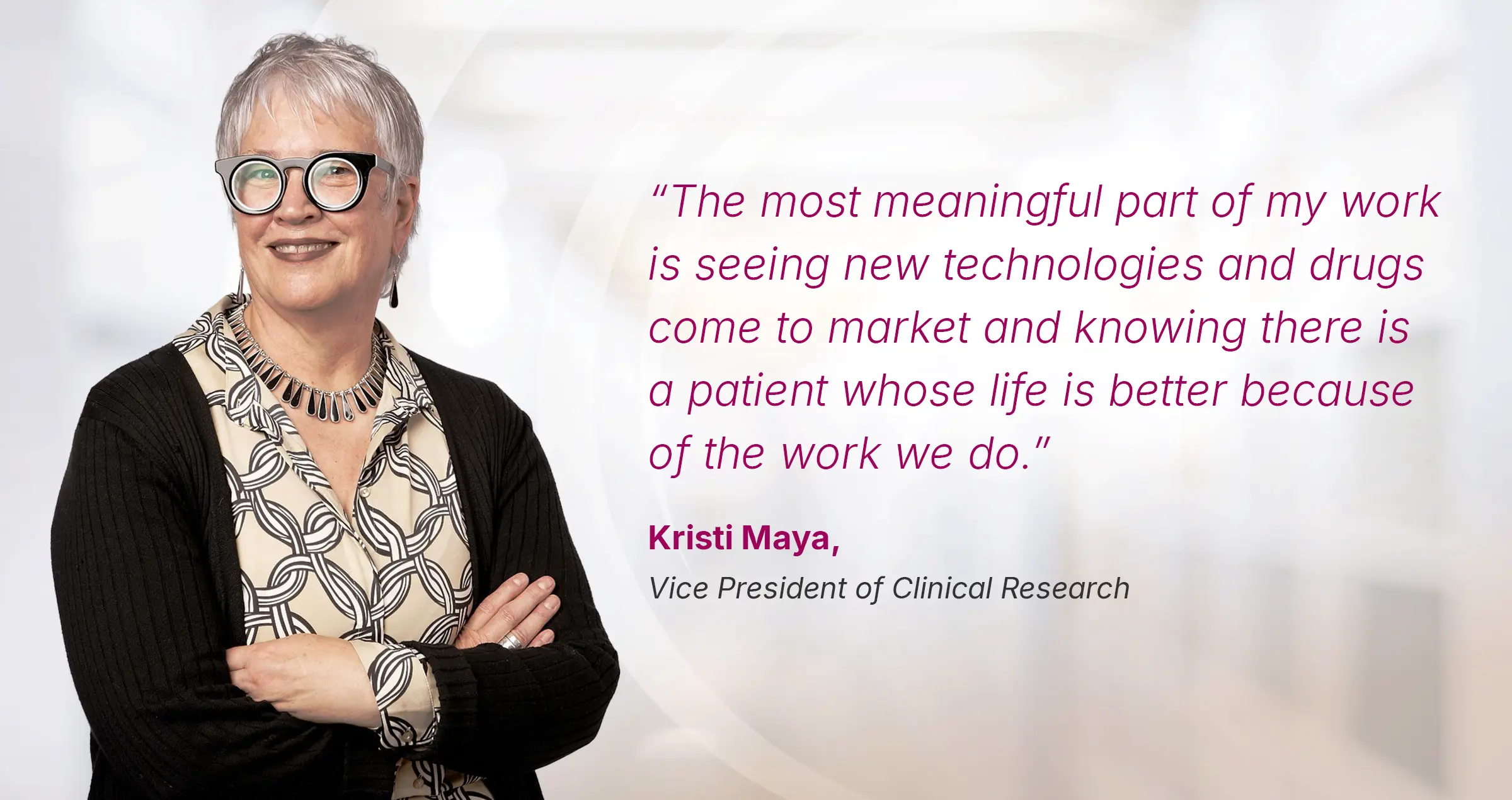
“Few organizations outside of academic medical centers have an opportunity to participate in groundbreaking studies,” said Kristi Maya, Vice President of Clinical Research for RadNet. For the past 15 years, Kristi has been at the helm of research, and the company has had ample opportunity to be an integral partner in a variety of research projects that have made significant impacts.
One example is amyloid PET imaging for Alzheimer's disease. RadNet participated in early clinical trials evaluating amyloid PET tracers before they received approval from the U.S. Food and Drug Administration (FDA). As a result, RadNet radiologists gained valuable experience interpreting these technologies long before they entered routine clinical practice.
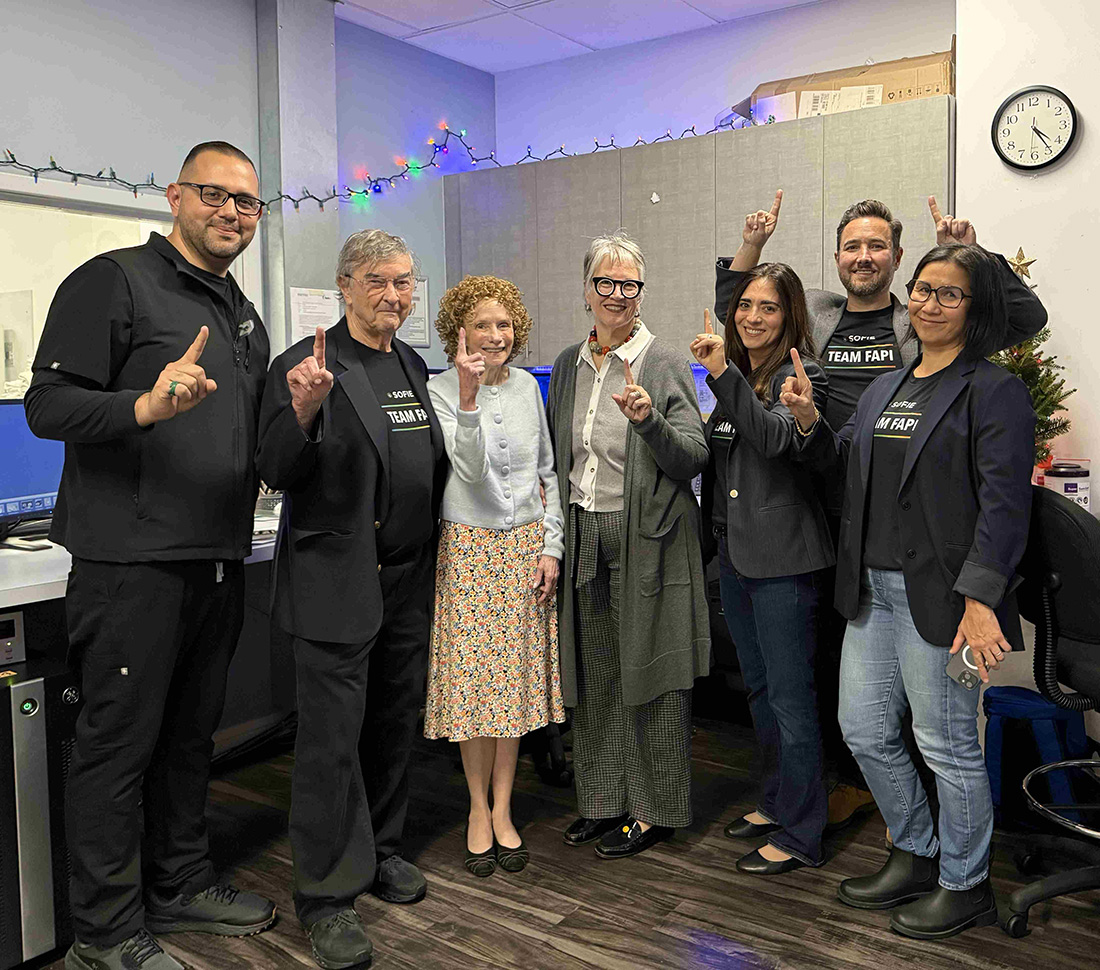
RadNet has also been very involved in clinical trials for fatty liver disease (known by the acronyms MASH and MASLD). The incidence of fatty liver disease in adult populations is 25-33 percent. When RadNet started participating in these clinical trials, there were no drugs available to treat this disease. “We saw a huge opportunity to upgrade our MRI technology to meet imaging needs for the development of drugs in this disease area,” Kristi said. “The first drug received FDA approval from Madrigal Pharmaceuticals in 2024. RadNet and our Houston Medical Imaging centers have imaged thousands of patients for clinical trials that contributed to the imaging data critical in helping to get this drug approved.”
Kristi's journey in research began at the University of California, Irvine Medical Center as a laboratory assistant in the Department of Pathology and Transfusion Medicine. Working alongside oncologists deepened her interest, eventually leading her to join the pediatric bone marrow transplant team at the leading cancer research center City of Hope as a clinical research coordinator. There, she said, "I learned a tremendous amount and knew I had found my niche."
Kristi went on to help build the research program at Breastlink, eventually serving as the organization's CEO. Breastlink, founded by Dr. John Link in 1995, was built around the idea of providing comprehensive breast care in one coordinated system rather than having patients navigate multiple providers on their own.
In 2008, RadNet acquired Breastlink and expanded the concept into a comprehensive breast health network. RadNet was already a major outpatient imaging provider, and the acquisition of Breastlink allowed the company to add breast disease management and patient support with a goal of bringing breast imaging, diagnosis, surgery, oncology, reconstruction, risk assessment, and patient navigation together under a coordinated care model.
Following the acquisition, RadNet asked Kristi to join the company and lead its growing research efforts. Today, her many years of experience have guided RadNet to become a national model for outpatient imaging research.
And what began as a four-person department focused primarily on supporting breast oncology clinical trials in California has grown into a 14-person team that manages a wide range of imaging research projects, from clinical trials and imaging vendor studies to collaborations with leading medical technology companies including Siemens, Philips and GE, and academic medical centers such as Stanford University, Cleveland Clinic, Memorial Sloan Kettering Cancer Center, Northwestern University and others.
Despite the excitement of innovation, Kristi notes that balancing research activities with the demands of busy imaging centers remains one of the team's greatest challenges. "Because we place these projects in our outpatient imaging centers, we have to make sure they're feasible, and that we can minimize disruptions to daily operations and continue serving our patients.”
RadNet focuses on projects that support referring physicians and organizations conducting research that need high-quality imaging. "That is where we can make the greatest impact,” Kristi said.
For Kristi, however, the rewards far outweigh the challenges. "The most meaningful part of my work is seeing new technologies and drugs come to market and knowing there is a patient whose life is better because of the work we do," she commented.
The desire to make an impact extends beyond her role at RadNet: Kristi also serves as Foundation Board President of the California-based Cancer Research Collaboration, a 501(c)(3) whose mission is to fund novel scientific research for cancer that will have maximum impact in the future.
At RadNet, Kristi credits the company’s leadership with supporting a research program that continues to grow and evolve, expanding opportunities to advance medical innovation while improving patient care.
“RadNet is incredibly progressive. Research not only creates opportunities for the company, it also gives us that window into the future, allowing us to see what's coming next in healthcare.”
Research Appreciation Day (July 5) is an opportunity to recognize individuals working to advance medicine and improve lives.
“We are extremely fortunate to have Kristi Maya directing all aspects of research for RadNet,” said Norman. “Her significant background in research program development, especially with respect to breast cancer, has been fundamental to the success of our robust research program.”
Kristi is quick to share the spotlight.
"I would like to thank my team and Dr. Judith Rose, Director of PET/CT and Clinical Research at RadNet, for all of their hard work, time, and energy," she said. "Also, the radiology technologists, imaging center site managers, directors and operations leadership that support our efforts. The dedication of this large and multifaceted team is what makes this program successful."